 Fate & Stars
The Sun tarot card meaning
The Sun meaning at a glance
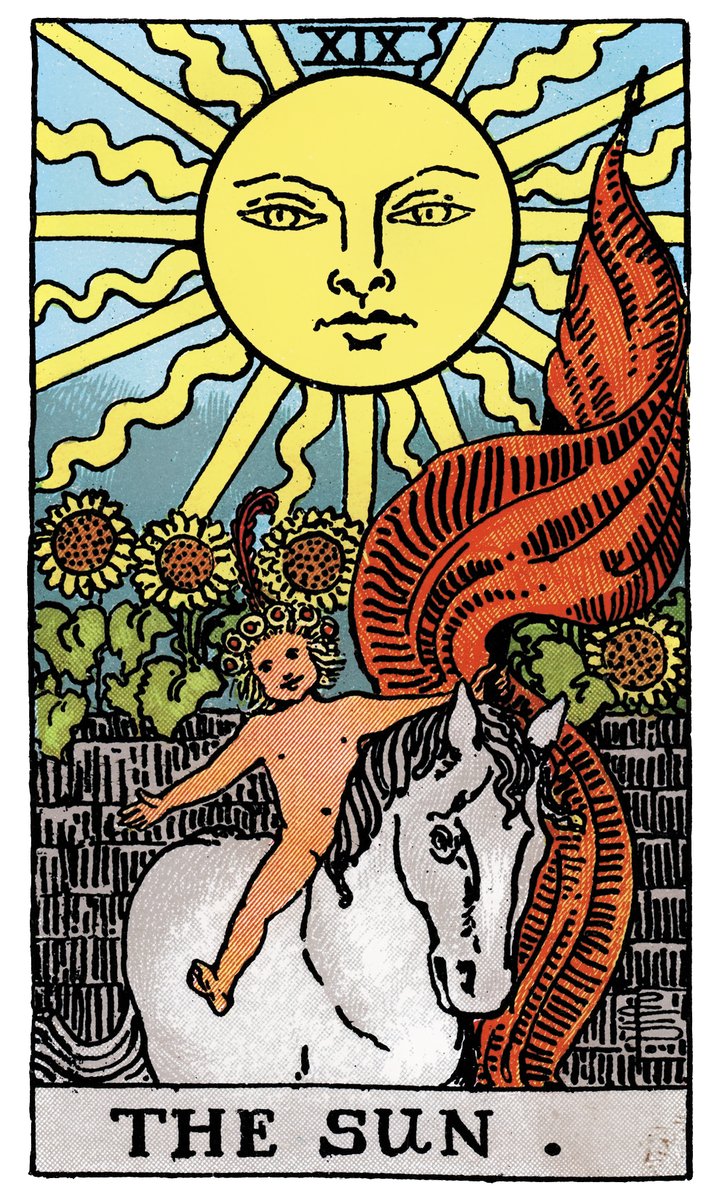
The Sun tarot card means vitality, clarity and open joy upright: success you can recognize and warmth you can share. Reversed, it suggests delayed recognition, muted warmth or forced positivity. The naked child on a white horse invites honest delight, while the giant sun face asks what is finally clear.
Things You Should Know
- Upright, The Sun favors visible progress and uncomplicated delight. Its giant sun face brings the situation into daylight; look for an understandable result rather than a hidden message.
- Reversed, The Sun often means warmth is difficult to receive. Delayed praise or muted pleasure can cloud the child's joy without making the whole situation a failure.
- The naked child represents openness without a costume. Affection and confidence are more convincing when you can be yourself than when you must perform happiness.
- The white horse and garden keep success grounded. Reliable support and patient cultivation can sit behind the effortless moment shown on The Sun; acknowledge what helped it grow.
- The red banner makes celebration visible, but does not guarantee an outcome. The Sun can encourage sharing good news without promising permanent happiness, pregnancy or another person's response.
Upright
The upright Sun brings things into daylight. Where you have been guessing, an honest conversation or visible result can make the situation easier to understand. Its clarity is less about solving a hidden riddle than discovering that you can finally say what is happening in plain language. The enormous sun face illuminates the whole scene; ask what becomes obvious when embarrassment and unnecessary secrecy fall away.
The child's naked joy suggests confidence without costume. In an advice position, The Sun can invite you to show work you are proud of, admit enthusiasm or join a celebration without immediately minimizing your contribution. The red banner gives that pleasure a visible expression. You do not have to turn every success into a performance, but you can let other people know that something matters to you.
In an outcome position, read The Sun as a possibility of greater openness and satisfaction within the question's actual limits. For a difficult group project, that might mean a clear demonstration and shared credit rather than universal acclaim. The white horse carries the child: ease can depend on reliable support, even when the moment feels wonderfully effortless.
In love, The Sun favors affection that can be expressed plainly. The unclothed child offers an image of being welcomed without constant impression management. For an established couple, this may mean laughing together again or naming what you appreciate. When dating, notice whether you can express enthusiasm without feeling foolish. The red banner can suggest visible affection, but the ease behind the display matters more than public posts. Shared daylight means both people can ask direct questions and receive understandable answers.
At work, The Sun can symbolize a contribution becoming easy to see: a successful demonstration, useful feedback or a result that finally makes sense to colleagues. Its red banner suits presenting something openly. Share concrete outcomes and give collaborators credit. For a money question, translate the same sunlight into transparency: explain what came in, what went out and what a celebration would cost. The Sun's warmth can make enjoying your resources feel permissible; its clarity asks you to check the figures before spending.
Reversed
The Sun reversed need not turn daylight into disaster. It can describe a bright experience that you cannot quite feel: praise arrives but slides past you, a celebration feels distant, or a promising result has not yet been acknowledged. Imagine the child's spontaneous delight becoming self-conscious under an audience's gaze. The warmth is difficult to receive, rather than necessarily absent.
Another possibility is forced positivity. The Sun's smiling scene becomes restrictive when you believe you must display the red banner of happiness while privately struggling. Ask whether someone is insisting that you focus on the good before a real problem has been heard. Honest pleasure leaves room for an honest complaint; a compulsory smile makes the light less revealing.
Reversed clarity can also be temporary clouding. A result may be encouraging while an announcement, explanation or decision remains delayed. Name the missing fact instead of assuming the whole garden has failed to bloom. As advice, reduce the pressure to feel radiant on command: accept one specific compliment, acknowledge one completed task or choose a small pleasure that needs no audience.
In relationships, the reversed Sun may describe a gap between looking happy together and feeling comfortable together. One person may want the red banner of a public celebration while the other wants a private strain acknowledged. Ask where affection stops feeling spontaneous. A quieter date, a specific thank-you or a truthful conversation may restore more warmth than another photograph of a supposedly perfect couple.
At work, the reversed Sun can appear when a good result is awaiting approval or when your contribution disappears inside a polished team success story. Separate the achievement from its recognition: what was completed, who saw it and what feedback is still missing? The child's exposed position also suggests discomfort with attention. If praise makes you retreat, accept one concrete observation before dismissing the whole success. Reversed sunlight invites a clearer account of what happened, without requiring you to feel radiant immediately.
The Sun upright vs reversed by situation
Use The Sun's daylight as the thread through these situations: upright, warmth is easier to share; reversed, ask what makes that warmth feel distant or staged.
| Situation | Upright | Reversed |
|---|---|---|
| Love | Express affection plainly; enjoy being yourself together. | A happy public image masks muted affection; talk privately. |
| Career | Show a finished result and share visible credit. | Recognition is delayed; ask who has reviewed the work. |
| Daily life | Enjoy play, company or a small garden success openly. | Pleasure feels like an assignment; choose joy without an audience. |
The Sun keywords
| Upright | Reversed |
|---|---|
| Unhidden joy | Muted delight |
| Daylight clarity | Temporarily clouded clarity |
| Unselfconscious confidence | Fear of being seen |
| Shared celebration | Delayed recognition |
| Warm affection | Performative happiness |
| Visible achievement | Difficulty accepting praise |
| Playful vitality | Joy under pressure |
| Honest self-expression | Overexposed private life |
The Sun in different questions and positions
The Sun as advice
As advice, The Sun asks you to bring something into the open that can benefit from daylight. Show the finished draft, say what you appreciate or accept an invitation you actually want. The child's nakedness suggests dropping an unnecessary performance, not exposing every private detail. Choose one honest expression of enthusiasm. If The Sun is reversed, ask whether you are raising the red banner for yourself or because an audience expects a cheerful display.
The Sun as an outcome
As an outcome, The Sun points toward a result you can understand and participate in: a clear answer, shared satisfaction or recognition of what worked. In a project reading, imagine the red banner as a successful demonstration rather than a promise of fame. The white horse reminds you to include the support carrying that result. Reversed, distinguish a delayed announcement from a failed achievement; identify what must become visible before you can celebrate.
The Sun in past, present and future positions
In the past, The Sun may recall a period when being seen felt safe, or a success that still shapes your expectations. Ask what made that garden flourish. In the present, its broad daylight invites you to name what is already going well without overlooking a real strain. In the future, The Sun suggests greater openness or shared delight to work toward; the child's ease is a possible quality of experience, not a fixed event or date.
The Sun in a yes-or-no spread
The Sun generally leans yes for a question about stepping into view, sharing your work or accepting welcome affection. Its daylight is most useful when the proposed action is clear. If you need a binary format, use the yes-or-no tarot reading and phrase the question around one specific action; then check whether The Sun's warmth reflects your actual willingness or pressure to sound enthusiastic.
Is The Sun a yes or no card?
The Sun upright leans toward an enthusiastic yes, especially for showing up openly, presenting good work or enjoying an invitation. The child on the white horse suggests confidence supported by ease: can you participate without pretending to be someone else? A yes about your own action is more useful here than treating the card as confirmation of someone else's future choice.
The Sun reversed often reads as yes with a delay or a clarity check, rather than an automatic no. Ask what dims the warmth: missing acknowledgment, embarrassment about being seen or pressure to perform happiness. If the question is whether to keep displaying the red banner while hiding a real difficulty, pause and name that difficulty first. For another structured prompt, try yes-or-no tarot with the missing information made explicit.
The Sun symbolism in the Rider–Waite–Smith deck
The giant sun face dominates the sky, combining brightness with a watchful human presence. Below it, the naked child spreads their arms on a white horse and holds a flowing red banner. Sunflowers rise behind a wall. Read together, these details suggest visible vitality, trust and pleasure without armor. The wall marks an enclosure; the child is outside it, giving openness a spatial form.
In A. E. Waite's account of The Sun, the child, white horse and red standard belong to a spiritual interpretation involving passage beyond a walled garden and direct illumination. Our everyday readings of confidence, recognition and unguarded joy are contemporary applications of the scene, rather than a claim that Waite prescribed each one.
The sunflowers provide a quieter counterpart to the child's movement: the garden has grown before this moment of celebration. In a reading, they can prompt you to notice what has been cultivated steadily enough to enjoy now. The wall gives that growth a boundary, while the child and horse occupy the open foreground. Reading this contrast as supported freedom is an interpretation of the picture, not a demand to abandon every protective boundary.
The red banner gives the child's delight color and motion. It makes joy outwardly legible without needing armor, a crown or a trophy. Alongside the giant sun face, it raises a useful reversed question: is visibility helping you express something real, or making you feel watched? The same scene can support confidence upright and expose the strain of compulsory cheerfulness reversed.
Frequently asked questions about The Sun
What does The Sun mean as someone's feelings?
The Sun can suggest warmth, delight and feeling comfortable being seen together. The child's unguarded posture makes ease a useful theme. It cannot reveal another person's private feelings; ask whether their words and actions show the same openness the picture evokes.
Does The Sun reversed mean a breakup?
No single reversal establishes that outcome. The Sun reversed may highlight a gap between the couple's happy image and their private experience, or affection that is hard to express. Discuss what feels muted instead of turning a clouded moment into a verdict.
What is the difference between The Sun and The Star?
The Star offers an image of replenishment and hope; The Sun puts warmth and participation in the foreground. You might read the difference as imagining a worthwhile future versus allowing yourself to enjoy something already present in daylight.
How is The Sun different from The Moon?
The Moon brings ambiguity and uncertain impressions into focus. The Sun's broad daylight favors what can be stated and shared clearly. Together, they invite you to distinguish an anxious interpretation from an observable fact, while leaving unanswered questions open.
What does The Sun mean in a daily tarot reading when I do not feel happy?
The Sun does not require you to match the child's exuberance all day. Look for one experience that feels clear, warm or easy to inhabit: praise you can accept, a playful conversation or time tending something alive. If the reversed Sun fits better, let muted delight be muted. Removing the demand to look sunny may make a small pleasure easier to notice.
What does The Sun mean for you?
Already have this card? Choose its orientation and add your question. We’ll interpret this exact card in context, without drawing a different one.
One personalized interpretation uses one free reading. Subscribers get unlimited readings, follow-up questions, and supplemental cards. Your reading stays private.
The Sun
For reflection and personal insight. Your choices shape what comes next.
A question to take with you
Like the child beneath The Sun, where could I express unguarded joy or accept recognition without performing happiness, and what honest feeling needs room beside that brightness?
Explore a question with the cards →These are contemporary reflection prompts, not a single definitive meaning. For historical background, see A. E. Waite’s The Pictorial Key to the Tarot. Interpretations vary with the reader and the context.