 Fate & Stars
Ace of Cups tarot card meaning
Ace of Cups meaning at a glance
The Ace of Cups represents an emotional opening, compassion and the beginning of connection. It invites attention to a feeling before its direction is settled.
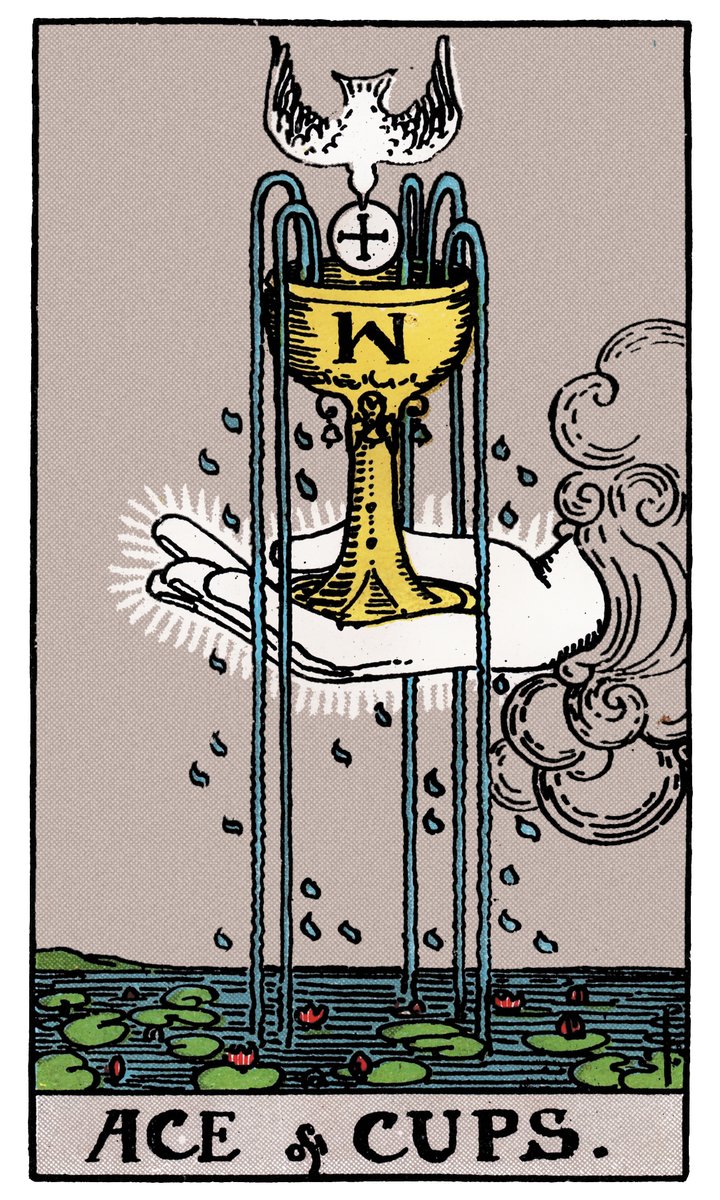
A hand offers a cup overflowing with water above a pool.
Upright meaning
Upright, the overflowing cup suggests receptivity: affection, creative feeling or a moment of renewed care. Give the feeling space and notice how it could be expressed. An opening is something to explore rather than a complete relationship or finished result.
Reversed meaning
Reversed, the Ace of Cups can describe blocked expression, emotional depletion or attention turning toward self-care. Ask whether a feeling needs privacy, clearer language or recovery time. Not every emotional beginning is ready to be shared immediately.
Interpret this reversed card for my situation →Love and relationships
In love, this Ace may fit a new connection or a warmer exchange within an existing relationship. Reversed, unmet needs or hesitation about vulnerability may need discussion. An emotional possibility is different from a promise of mutual commitment.
Work and everyday life
At work, notice a creative idea or a renewed sense of purpose. Reversed, emotional exhaustion may make meaningful work difficult to recognize. Consider what would restore interest before taking on another commitment.
What does Ace of Cups mean for you?
Already have this card? Choose its orientation and add your question. We’ll interpret this exact card in context, without drawing a different one.
One personalized interpretation uses one free reading. Subscribers get unlimited readings, follow-up questions, and supplemental cards. Your reading stays private.
Ace of Cups
For reflection and personal insight. Your choices shape what comes next.
A question to take with you
An emotional opening may be a feeling, conversation or creative impulse; let it develop without demanding an immediate outcome. Which feeling needs acknowledgement before I act?
Explore a question with the cards →These are contemporary reflection prompts, not a single definitive meaning. For historical background, see A. E. Waite’s The Pictorial Key to the Tarot. Interpretations vary with the reader and the context.