 Fate & Stars
The Emperor tarot card meaning
The Emperor meaning at a glance
The Emperor represents authority, structure and the responsibility to make decisions that others can rely on. Upright, it favors clear boundaries, steady leadership and workable plans. Reversed, it can expose domination, brittle rules or an absence of direction. Its central question is how power can create security without taking away choice.
Things You Should Know
- The Emperor asks who makes the rules, who benefits from them and who accepts responsibility when something goes wrong.
- Upright authority earns trust through consistency, fair expectations and the willingness to explain a decision.
- Reversed energy can appear as excessive control or as hesitation that leaves everyone without dependable leadership.
- In relationships, reliable commitment matters, but practical protection should leave room for each person's independence.
- The stone throne and concealed armor connect durable structures with the effort required to defend and maintain them.
Upright The Emperor meaning
The Emperor upright describes the moment when an idea needs a framework. Someone must set a budget, assign responsibilities, decide what is acceptable and carry the consequences of those decisions. Its strength is follow-through: a promise becomes more credible when there is a method for keeping it. Ask what would make your situation predictable enough for people to participate confidently.
In love, this can mean discussing exclusivity, sharing household responsibilities or making plans that survive a stressful week. A partner might show affection by arriving when promised or handling a difficult practical task. Those actions matter, although they do not replace emotional conversation. If the card describes you, express care without assuming that knowing the solution gives you permission to choose for someone else.
At work, the Emperor favors defined roles, accountable management and a process that can be taught. A new supervisor may need to settle competing priorities rather than personally complete every assignment. For an independent project, write down the scope, deadline and decision owner. A useful structure reduces repeated arguments; a poor one creates paperwork while leaving the original confusion untouched.
The Emperor reversed meaning
The Emperor reversed brings the use of authority into focus. At one extreme, a person insists on obedience, treats disagreement as disloyalty or changes the rules to avoid being challenged. At the other, nobody will make a decision, so the loudest voice becomes the unofficial leader. Both patterns can leave people uncertain about what they may safely ask for.
In a relationship, examine whether routines are mutually agreed or imposed. Choosing every restaurant seems small until one partner realizes that their preferences never count. The practical response might be a clear conversation about shared decisions and personal boundaries. If expressing a preference brings intimidation, take that behavior seriously rather than interpreting the card as an instruction to become more accommodating.
In a workplace, the reversal may describe micromanagement, unclear reporting lines or an exhausted manager who cannot delegate. Identify the specific failure before deciding that all hierarchy is harmful. A written approval limit may solve a bottleneck; another meeting may not. As personal advice, practice making one proportionate decision and accepting feedback. Responsible leadership can revise a rule without collapsing into either defensiveness or complete withdrawal.
The Emperor upright vs reversed by situation
| Situation | Upright | Reversed |
|---|---|---|
| Love | Dependable plans, agreed boundaries and practical commitment | Possessiveness, unequal decisions or avoidance of responsibility |
| Career | Clear ownership, steady management and repeatable processes | Micromanagement, uncertain authority or rules without purpose |
| Daily life | A schedule that protects essential commitments | An inflexible routine or no workable organizing system |
Use the comparison to locate a behavior you can actually observe. Two people can both value stability while disagreeing about how to create it. Ask whether the arrangement can be questioned and whether its responsibilities are distributed fairly. That distinction separates protective structure from control dressed up as concern.
The Emperor keywords
| Upright | Reversed |
|---|---|
| Authority with accountability | Control without consent |
| Boundaries and consistency | Rigid or missing boundaries |
| Planning and administration | Disorganization or bureaucracy |
| Protection and responsibility | Domination or abdication |
Read these terms as different expressions of power rather than a list of personality labels. The Emperor may describe a committee, a parent, your own habits or an agreement between equals. Before calling someone authoritative, notice whether they also accept limits on their authority. Before calling yourself undisciplined, check whether the plan was realistic enough to follow.
The Emperor as advice, outcome and spread positions
As advice, the Emperor asks you to establish the conditions under which a decision can hold. In a fictional community workshop, Mara keeps lending equipment without recording returns. People become frustrated when tools disappear. She creates a simple checkout sheet, names a storage contact and explains how borrowers can request exceptions. Her authority serves access because everyone can understand and use the system.
As an outcome, the card can suggest a settled arrangement: a defined role, a formal agreement or a routine that stops a recurring dispute. It does not certify that a particular boss will approve your request. Look for evidence that the necessary people have accepted their duties and that the agreement includes a way to handle mistakes.
In a past position, the Emperor may point to rules inherited from a family or institution. In the present, it asks who currently has the power to act. In an obstacle position, the same structure may have become too rigid to address a new problem. For example, a club treasurer who requires two signatures for a tiny purchase may need a sensible threshold rather than another layer of approval.
If the Emperor appears beside the Empress, consider how practical order supports growth and care. Beside the Hierophant, distinguish the person enforcing a rule from the tradition that gives the rule its legitimacy. Neither pairing requires assuming a literal father, husband or male manager is involved.
Is The Emperor a yes or no card?
The Emperor usually leans yes when the question concerns a prepared plan, a reasonable boundary or a commitment with clear responsibilities. It is less reassuring when the desired yes depends on persuading someone to surrender their autonomy. Ask whether the proposal has a sound foundation and whether everyone affected understands the terms.
Reversed, it often suggests revising the power arrangement before proceeding. A decision may be blocked by an unnecessary approval step, or your own wish for certainty may be narrowing the options. The yes or no tarot guide offers a way to frame the question; use this card to examine responsibility and consent rather than treating authority as automatic permission.
The Emperor symbolism in the Rider–Waite–Smith deck
Pamela Colman Smith's Emperor sits on a stone throne decorated with ram heads. The seat looks enduring but uncomfortable, making authority feel like a duty rather than a luxury. His ankh-shaped scepter and globe are emblems of rule. Armor shows beneath the red robe, suggesting readiness to defend the order he represents. Behind him, arid mountains provide a severe setting rather than a fertile garden.
Waite's Pictorial Key description of the Emperor emphasizes executive power and identifies the scepter and ram-fronted throne. The boundary and leadership advice in this guide develops those images into contemporary situations. The paternal association is symbolic: it concerns provision, limits and responsibility, and can apply to people of any gender.
Notice the cost of remaining armored. Protection is useful when a real threat exists, but continual defensiveness can make ordinary closeness difficult. In a reading about home life, ask where dependable rules offer relief and where a softer response would make it easier to speak honestly.
Frequently asked questions about The Emperor
Does the Emperor in love mean a controlling partner?
It can describe control, especially when the question already concerns unequal power, but that is not its only relationship meaning. Upright, it may indicate someone who values reliability and defined commitment. Assess whether both people can disagree, maintain friendships and negotiate plans. A dependable partner makes room for your judgment; control makes independence costly.
Can the Emperor represent me if I am not a father or a man?
Yes. You might be setting project boundaries, managing a shared home or learning to make decisions without seeking everyone's approval. The role concerns the exercise of authority rather than gender or parenthood. Consider which responsibilities you have actually accepted and which ones you have assumed without asking whether others want that arrangement.
What does the Emperor reversed mean when asking about a boss?
It can draw attention to inconsistent expectations, excessive oversight or reluctance to own difficult decisions. Name a concrete example before interpreting the whole working relationship. If approvals repeatedly arrive late, clarify the deadline and escalation route. The card cannot establish your boss's motives, but it can help you formulate a precise question about how work is governed.
Is the Emperor good advice for setting boundaries with family?
It can support a clear, calm limit, particularly when a recurring obligation has become unsustainable. State what you can provide, when you are available and what you will do if the request exceeds that limit. Avoid turning the boundary into a verdict about someone's character. Its usefulness comes from consistent action after the conversation, not from sounding more forceful.
How is the Emperor different from the Hierophant?
The Emperor concerns administration, decision-making and the maintenance of order. The Hierophant more often raises teaching, shared beliefs and established practices. A school principal deciding who handles a complaint illustrates the Emperor; the educational tradition shaping school expectations illustrates the Hierophant. In one reading, you may need to question both who has authority and why that authority is accepted.
What does The Emperor mean for you?
Already have this card? Choose its orientation and add your question. We’ll interpret this exact card in context, without drawing a different one.
One personalized interpretation uses one free reading. Subscribers get unlimited readings, follow-up questions, and supplemental cards. Your reading stays private.
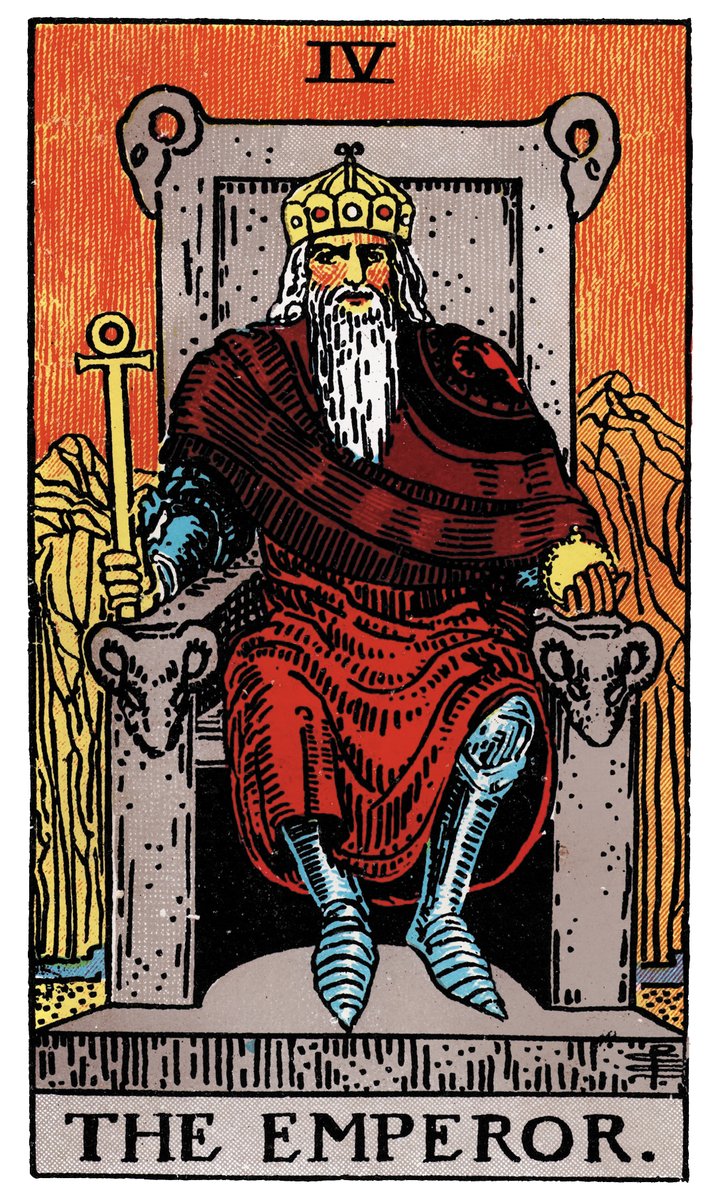
The Emperor
For reflection and personal insight. Your choices shape what comes next.
A question to take with you
Which boundary would create more stability without excessive control?
Explore a question with the cards →These are contemporary reflection prompts, not a single definitive meaning. For historical background, see A. E. Waite’s The Pictorial Key to the Tarot. Interpretations vary with the reader and the context.