 Fate & Stars
The Hierophant tarot card meaning
The Hierophant meaning at a glance
The Hierophant tarot card means shared teaching, established practices and commitment to a system of values upright. Reversed, it can indicate questioning inherited rules, rigid gatekeeping or a need for a more personal approach. The teacher, attendants and crossed keys ask who transmits knowledge, who receives access and which traditions deserve your participation.
Things You Should Know
- The Hierophant makes knowledge communal. Teachers, rituals and agreed methods can help people learn without having to invent every practice alone.
- Upright structure still needs a purpose. Ask what a rule protects or teaches before assuming that age or institutional status makes it suitable for every situation.
- Reversed questioning can be constructive. Revising an inherited standard may preserve its useful intent while changing who can participate.
- Commitment is broader than a wedding. The card can concern an explicit agreement, shared ethics, a course of study or membership in a community.
- The crossed keys raise an access question. Notice who can explain the requirements and whether credentials, customs or gatekeepers are helping people learn or excluding them without reason.
The Hierophant upright meaning
The upright Hierophant brings attention to learning and living within a shared framework. An apprenticeship, professional code, family ritual or community practice may give a situation a dependable shape. Instead of improvising alone, you can ask how experienced people approach the problem and why their method developed. The card favors teachable participation, including the ability to ask respectful questions.
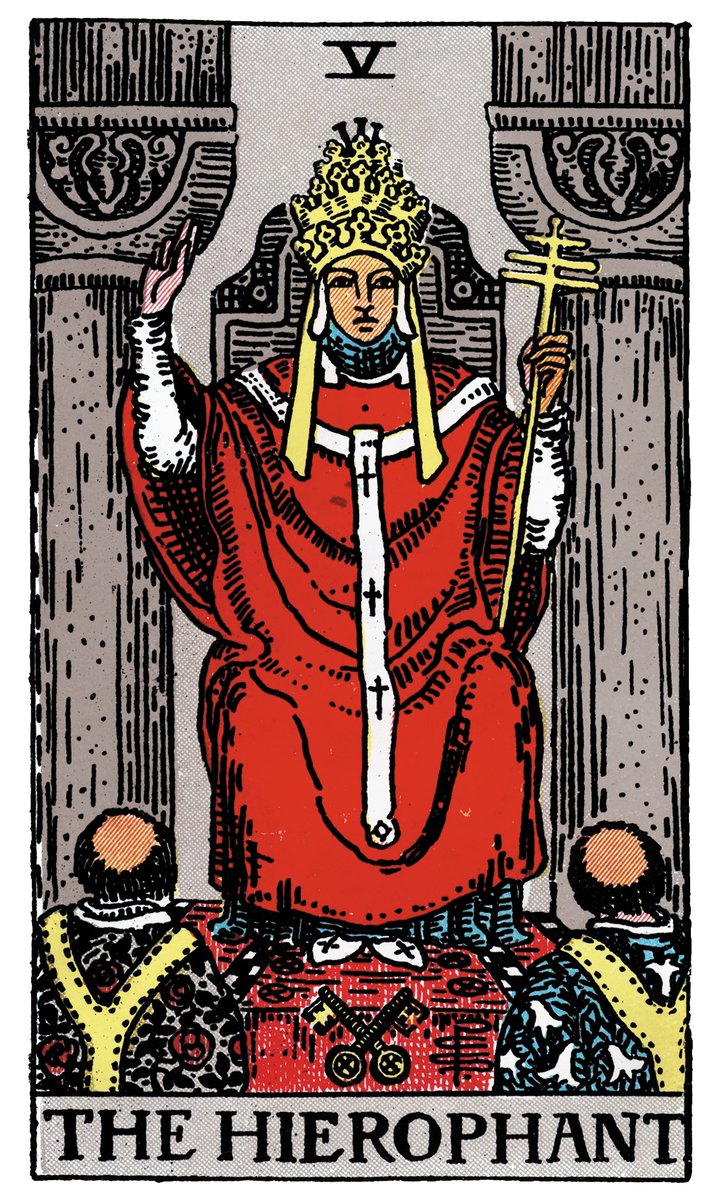
The seated figure faces two attendants, making transmission part of the image. Knowledge is being offered through an office and a recognizable form. In contemporary reading, this can suggest finding a mentor who can explain both the procedure and its purpose. A useful teacher makes the next step understandable rather than merely asserting authority.
In love, the Hierophant can describe explicit commitments and shared expectations. Discuss what partnership means to each person: exclusivity, family involvement, ceremony, household responsibilities or spiritual practice. Do not assume two people mean the same thing by commitment because they use the same word. The strongest agreement is one both can describe and freely accept.
At work, the card may favor training, established procedures and checking the standards relevant to your role. If a process protects quality or coordination, learning it can create freedom to contribute competently. In daily life, a recurring ritual may connect you with other people or stabilize your week. Participation need not mean surrendering judgment; it can mean understanding the tradition well enough to practice it consciously. Ask what belonging requires, what it offers and whether those terms fit your values.
The Hierophant reversed meaning
The Hierophant reversed may reveal a mismatch between an inherited framework and a present need. You might be following a family expectation you no longer endorse, completing a ritual without understanding it or trying to learn through a method that excludes your questions. Name the actual rule and its effect before deciding whether to revise, leave or study it more deeply.
Rigid authority is one possible expression. A gatekeeper may treat requests for explanation as disloyalty, or a group may use belonging as leverage for conformity. Assess what happens when someone asks a reasonable question. A tradition that can explain its purposes offers a different kind of participation from one that depends on silence.
The reversal can also describe rejecting structure too quickly. Disliking a rule is not the same as understanding why it exists. Before discarding a process that coordinates several people, identify what would replace its useful function. Personal independence becomes more sustainable when it includes the responsibilities formerly held by the institution or group.
In relationships, ask whether conventional milestones fit both people's wishes. A nontraditional arrangement still needs explicit consent and workable agreements. At work, distinguish an outdated internal habit from a requirement you must verify through the appropriate official source. Tarot cannot determine which professional or legal rules apply. As advice, seek a teacher or community whose standards you can examine, and retain what serves your learning. Questioning a framework may deepen your values instead of leaving you without any commitments at all.
The Hierophant upright vs reversed by situation
Read these situations through the relationship between shared standards and personal participation.
| Situation | Upright | Reversed |
|---|---|---|
| Love | Define commitment through values both partners accept. | Inherited expectations do not fit the actual partnership. |
| Career | Learn a reliable method from a qualified mentor. | Gatekeeping blocks learning, or an old process needs review. |
| Daily life | Use a meaningful ritual to sustain belonging. | Keep a custom only from obligation, or devise a thoughtful alternative. |
The Hierophant keywords
| Upright | Reversed |
|---|---|
| Shared instruction | Questioned doctrine |
| Accountable mentorship | Unexplained authority |
| Chosen tradition | Inherited obligation |
| Explicit commitment | Unconventional agreement |
| Community practice | Outsider perspective |
| Ethical framework | Values under revision |
| Initiation into a method | Barriers to access |
| Meaningful ritual | Empty observance |
The Hierophant in different questions and positions
Advice when choosing a teacher
Suppose you are comparing courses in a subject you want to practice seriously. The Hierophant asks how instruction is structured, what feedback students receive and whether the teacher can explain the limits of their expertise. A prestigious label is only one detail. Look for a learning environment in which questions improve understanding and standards are stated clearly.
An obstacle involving family expectations
In an obstacle position, the Hierophant may identify the pressure of a milestone everyone assumes you want. Separate the value from its conventional expression. A family may value commitment while disagreeing about ceremony or timing. Reversed, a careful conversation can establish what you choose to honor and which expectations you are declining.
Past, present and future positions
In the past, this card can indicate the teaching or community that shaped your default assumptions. In the present, examine the institution, mentor or agreement influencing the decision now. In the future, it may suggest a need for formal learning or explicit shared standards. It cannot guarantee admission, certification or approval by a particular organization.
As a person or social role
The card may describe someone acting as teacher, adviser or keeper of a tradition. That role can be held responsibly or rigidly. Rather than assuming the person is wise because of their position, notice whether they make knowledge accessible, welcome relevant questions and distinguish their personal opinion from the framework they represent.
Is The Hierophant a yes or no card?
The Hierophant upright often leans yes through an established route or clearly shared agreement. This can fit joining a course, asking a mentor or discussing commitment. The conditions matter: understand the requirements and decide whether participation aligns with your values. The card does not certify the quality of an institution by itself.
Reversed, the lean may be no to automatic conformity, or consider a better-fitting approach. Ask whether the obstacle is an unsuitable rule or reluctance to accept any structure. For a yes-or-no tarot question, focus on a choice such as requesting an explanation or comparing alternatives. A broad question about whether every tradition is good or bad loses the specific access and values issue the Hierophant brings into view.
The Hierophant symbolism in the Rider–Waite–Smith deck
A crowned religious figure sits between pillars, holding a staff topped with a triple cross. One hand makes a formal sign, two attendants kneel before the seat and crossed keys lie near the feet. The arrangement presents authority through recognized symbols and a relationship between teacher and recipients.
Waite's discussion of The Hierophant emphasizes the outward, institutional expression of religion. He also warns against confusing the representative office with the totality of what it symbolizes. That distinction gives modern readers a useful question: is a leader serving the teaching, or acting as though their personal preferences exhaust its meaning?
Contemporary interpretations extend the classroom-like arrangement to mentorship, professional communities and family customs. These are applications of the image, not claims that every institution has sacred authority. The keys can prompt reflection on how access is granted, while the attendants invite attention to what learners need in order to participate intelligently.
Frequently asked questions about The Hierophant
Does The Hierophant in love mean marriage?
Marriage is a possible association when formal commitment is already the subject. The card can also concern shared ethics, family expectations or defining a partnership. It does not establish that someone will propose, and a meaningful commitment need not follow a single conventional form.
What does The Hierophant reversed mean for a spiritual path?
It may describe questioning an inherited teaching, seeking another community or building a more personal practice. Identify what no longer fits and what still matters. You do not have to choose between accepting every claim and discarding everything you learned.
Is The Hierophant always a religious card?
Its Rider–Waite–Smith imagery is explicitly religious, but contemporary readings often apply its teaching structure to education, professional standards and social customs. Keep the question in view so that a workplace procedure does not become an unsupported statement about someone's beliefs.
Can The Hierophant reversed support a healthy relationship?
It can fit a partnership that chooses an unconventional arrangement thoughtfully. Health depends on clear consent, mutual respect and workable agreements, rather than conformity alone. The reversal invites scrutiny of assumptions; it does not excuse secrecy or ignoring a partner's stated needs.
How is The Hierophant different from The Magician?
The Magician highlights individual application of tools, while the Hierophant highlights knowledge transmitted through a shared system. A reader might need both: a reliable method to learn and enough personal initiative to put it into practice.
What does The Hierophant mean for you?
Already have this card? Choose its orientation and add your question. We’ll interpret this exact card in context, without drawing a different one.
One personalized interpretation uses one free reading. Subscribers get unlimited readings, follow-up questions, and supplemental cards. Your reading stays private.
The Hierophant
For reflection and personal insight. Your choices shape what comes next.
A question to take with you
What am I learning, and which rule needs thoughtful examination?
Explore a question with the cards →These are contemporary reflection prompts, not a single definitive meaning. For historical background, see A. E. Waite’s The Pictorial Key to the Tarot. Interpretations vary with the reader and the context.