 Fate & Stars
The Tower Tarot Card Meaning: Upright and Reversed
The Tower meaning at a glance
The Tower represents disruption that exposes an unstable assumption or arrangement. Upright, its lightning strike suggests a sudden confrontation with what no longer holds. Reversed, it may describe resisted change, an internal reckoning or a smaller disruption. The practical question is what needs securing before you decide how to rebuild.
Things You Should Know
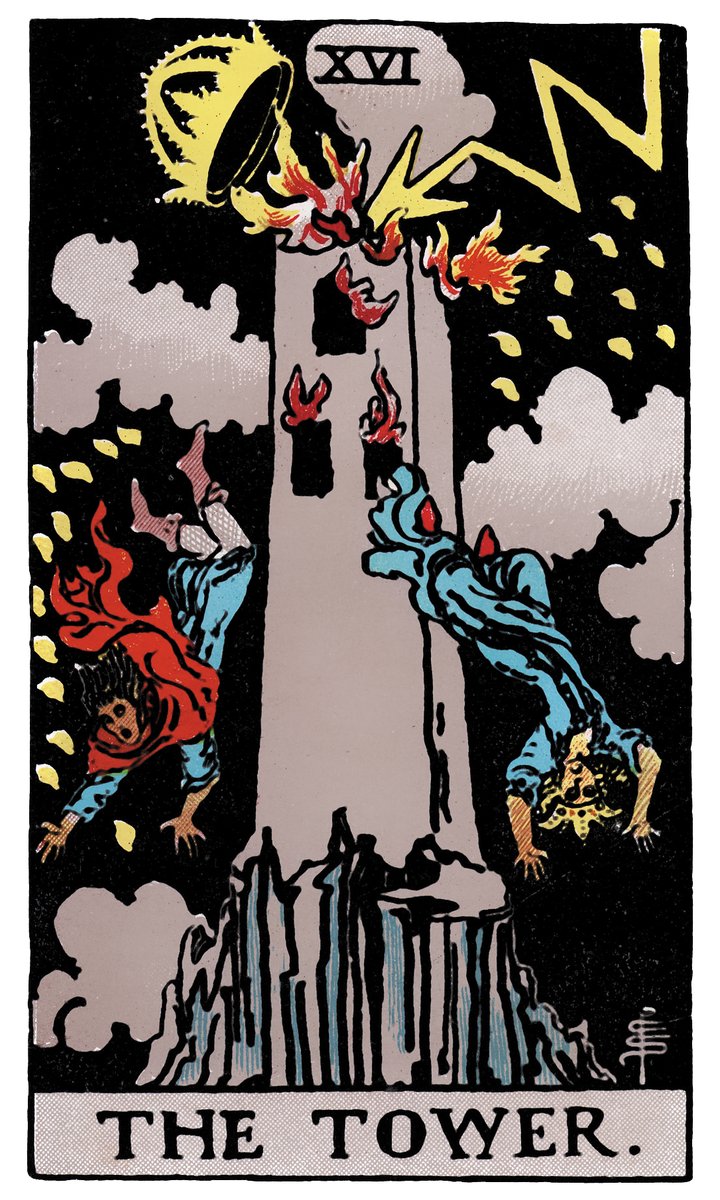
- The Tower exposes a structure that cannot continue unchanged. Its broken crown invites questions about authority, certainty or an explanation that once seemed beyond challenge.
- Disruption needs a response before it needs a grand meaning. When plans actually change, establish what happened and what immediate commitments need attention before deciding what the experience teaches.
- Reversed does not reliably mean disaster avoided. It may describe resistance, quieter reassessment or a problem being contained; choose the reading that matches known circumstances.
- The falling figures keep people central. An argument about a failing system can overlook those affected by it, so consider whose needs disappear inside a dramatic story of transformation.
- A frightening illustration is not a forecast of harm. This guide uses The Tower to examine assumptions and disruption, rather than predicting an accident, punishment or unavoidable personal catastrophe.
Upright Tower meaning
The Tower upright often fits the moment when an explanation stops working. A team discovers that its supposedly finished project depends on an unavailable resource; a relationship conversation reveals incompatible expectations; an institution changes a rule everyone relied upon. The common thread is a loss of assumed stability. Ask precisely which belief or arrangement has been contradicted, because the image's drama can otherwise make every part of life feel implicated.
The lightning bolt gives disruption a sudden shape, but the underlying weakness may be older than the announcement. If a plan depended on one person's unconfirmed promise, the useful question is how that dependency became invisible. You can examine the assumption without claiming that anyone deserved the shock. Recognition may be necessary and still feel upsetting, inconvenient or unfair.
In love, The Tower can describe a conversation that changes the relationship's terms. Perhaps both people used the same word for commitment while meaning different things. Work from what was actually said and what choices remain available. The card does not establish betrayal or require a breakup; it asks whether the previous account of the relationship can still accommodate the facts.
At work, separate the immediate interruption from the redesign it may require. If a deadline collapses, list affected tasks, contact the relevant people and identify what can still be delivered. The fallen crown suggests that seniority or confidence cannot substitute for a workable plan. In resource questions, use the same discipline to check a failed assumption about costs or availability; the card itself supplies no new figures.
The Tower reversed meaning
The Tower reversed may describe pressure being held inside a structure that already needs examination. Everyone knows the schedule is unrealistic, yet meetings continue as though nothing has changed. Resistance can come from fear of losing status, disappointing someone or admitting previous effort will not produce the expected result. Ask what becomes more costly each time the conversation is postponed.
A second possibility is an internal change that has not become visible to others. You may have stopped believing a rule you once organized your life around, while your daily arrangements remain familiar. There need not be an external explosion for that reassessment to matter. Describe the belief you are revising and one practical choice affected by it, rather than searching for a crisis to match the picture.
Sometimes a smaller correction really can contain a problem. A mistaken booking is caught early, or a team revises its scope before announcing a promise. Read containment from the evidence of those actions, rather than assuming reversal makes you immune to disruption. What was found, who addressed it and what remains unresolved? Those details distinguish useful repair from reassurance that nobody has tested.
In a relationship, reversed Tower advice might be to stop treating a recurring disagreement as too dangerous to name. Choose a specific topic and a setting where both people can participate. At work, it might mean reporting a dependency while there is still time to adapt. Neither application requires provoking an argument; the aim is to reduce the distance between the arrangement people describe and the one they actually inhabit.
The Tower upright vs reversed by situation
The Tower's direction concerns how instability becomes visible. Upright often places the interruption in the foreground; reversed asks whether the reckoning is private, delayed or being managed through concrete repair.
| Situation | Upright | Reversed |
|---|---|---|
| Love | A conversation changes the terms you thought were shared. | An unresolved incompatibility is repeatedly kept off the agenda. |
| Career | A failed dependency forces a revision of the plan. | Flag a weakness before another promise is built upon it. |
| Daily life | Respond to an unexpected change in your arrangements. | Test whether a small repair actually addresses the recurring problem. |
The Tower keywords
| Upright | Reversed |
|---|---|
| Exposed assumptions | Resisted recognition |
| Abrupt disruption | Delayed confrontation |
| Collapsing certainty | Private reassessment |
| Structural weakness | Unfinished repair |
| Changed terms | Contained interruption |
| Unwelcome revelation | Fear of destabilization |
| Immediate response | Quiet course correction |
| Rebuilding from facts | Clinging to the old account |
The Tower in different questions and positions
The Tower as advice
Imagine a volunteer event whose venue is suddenly unavailable. Tower advice starts with confirming the cancellation, identifying affected people and deciding what can be moved or postponed. Later, examine why no alternative was considered. This fictional example shows the distinction between responding to disruption and narrating it: announcing a transformative lesson does not answer the immediate question of where participants should go.
The Tower as an outcome
As an outcome, The Tower can suggest that the current arrangement will face a test it cannot absorb unchanged. State that condition clearly: if the team continues promising delivery without the required approval, a public correction may follow. The reading becomes useful when it identifies a dependency you can check. Reversed, consider whether a smaller, earlier revision could make the eventual result less disruptive.
The Tower in past, present and future positions
In the past, the card can mark a rupture that still shapes what you expect from authority or stability. In the present, ask what has already been contradicted and which facts need confirming. In the future, use The Tower as a prompt to examine fragile assumptions while choices remain open. It offers no fixed date on which a dramatic event must occur.
The Tower in a yes-or-no spread
A question such as whether to keep relying on an unconfirmed promise fits this card more closely than asking whether your whole future is safe. Use a yes-or-no tarot reading to isolate the decision, then investigate the assumption behind it. The Tower's contribution is the challenge to your premise, which can be more informative than the binary label.
Is The Tower a yes or no card?
For this guide, The Tower upright usually leans no to continuing on the existing assumptions. It can support a yes to naming a clear contradiction or revising a failed arrangement. Those answers address different actions, so the question's wording matters. Destruction is an image in the card, not an instruction to dismantle something merely because it feels uncomfortable.
Reversed, we use pause and establish whether the weakness is being addressed. Quiet progress and quiet denial can look similar from outside. Before repeating a yes-or-no question, identify an observable sign of repair, such as a confirmed alternative or a revised agreement. Reassurance becomes more useful when it refers to something that has actually changed.
The Tower symbolism in the Rider–Waite–Smith deck
Lightning strikes the top of a narrow tower, dislodging a crown while figures fall from the building. Fire and a dark sky make the scene abrupt and exposed. Our reading begins with that visible loss of a protected position: something once elevated above question can no longer remain untouched by events.
Waite's discussion of The Tower considers the destruction of false doctrine and competing spiritual explanations of the image. His account is more specific than a general slogan that every upheaval is beneficial. Our examples involving schedules, shared expectations and failed dependencies are contemporary applications of exposed certainty, rather than events he prescribed for every appearance of the card.
The falling people complicate any easy celebration of collapse. The picture includes consequences for those inside the structure. In a practical reading, ask who needs information, a revised arrangement or time to respond. If you interpret the broken crown as challenged authority, also examine the responsibilities attached to that authority. Giving up an untenable claim does not remove the need to consider people affected by it.
Frequently asked questions about The Tower
Does The Tower mean something terrible will happen?
Drawing The Tower supplies no evidence of an impending event. Its image can help you examine a fragile plan, a disruptive conversation or a belief that has already changed. Begin with the question and known circumstances instead of treating fear as confirmation that a prediction is coming true.
Does The Tower always mean a breakup?
A relationship may undergo an honest renegotiation without ending. The relevant question is which expectation has been challenged and whether both people want workable new terms. The Tower cannot determine a partner's intentions or establish a hidden betrayal from the illustration alone.
Is The Tower reversed better than upright?
There is no automatic ranking. A contained problem may be easier to handle, while a postponed conversation may increase uncertainty. Identify whether the reversal fits repair, resistance or private reassessment, and explain the evidence for that choice within the reading.
How is The Tower different from Death?
Death emphasizes endings and the transition they require. The Tower foregrounds the shock of a structure or explanation failing. A planned departure and an unexpected cancellation can both change your direction, but they raise different questions about preparation and immediate response.
What should I do after drawing The Tower for today?
Choose one realistic check of an assumption your day depends upon: confirm a meeting place, clarify a responsibility or acknowledge a changed plan. Ordinary verification is enough to work with the theme. You do not need to manufacture upheaval or reinterpret every inconvenience as a major revelation.
What does The Tower mean for you?
Already have this card? Choose its orientation and add your question. We’ll interpret this exact card in context, without drawing a different one.
One personalized interpretation uses one free reading. Subscribers get unlimited readings, follow-up questions, and supplemental cards. Your reading stays private.
The Tower
For reflection and personal insight. Your choices shape what comes next.
A question to take with you
What unstable assumption needs to be acknowledged?
Explore a question with the cards →These are contemporary reflection prompts, not a single definitive meaning. For historical background, see A. E. Waite’s The Pictorial Key to the Tarot. Interpretations vary with the reader and the context.