 Fate & Stars
Two of Wands tarot card meaning
Two of Wands meaning at a glance
The Two of Wands asks what you want beyond the territory you already know. A figure on a battlement holds a globe while one wand remains fixed nearby. Upright, ambition becomes a considered plan; reversed, examine fear of leaving safety, missing preparation or expansion delayed because the next step remains undefined.
Things You Should Know
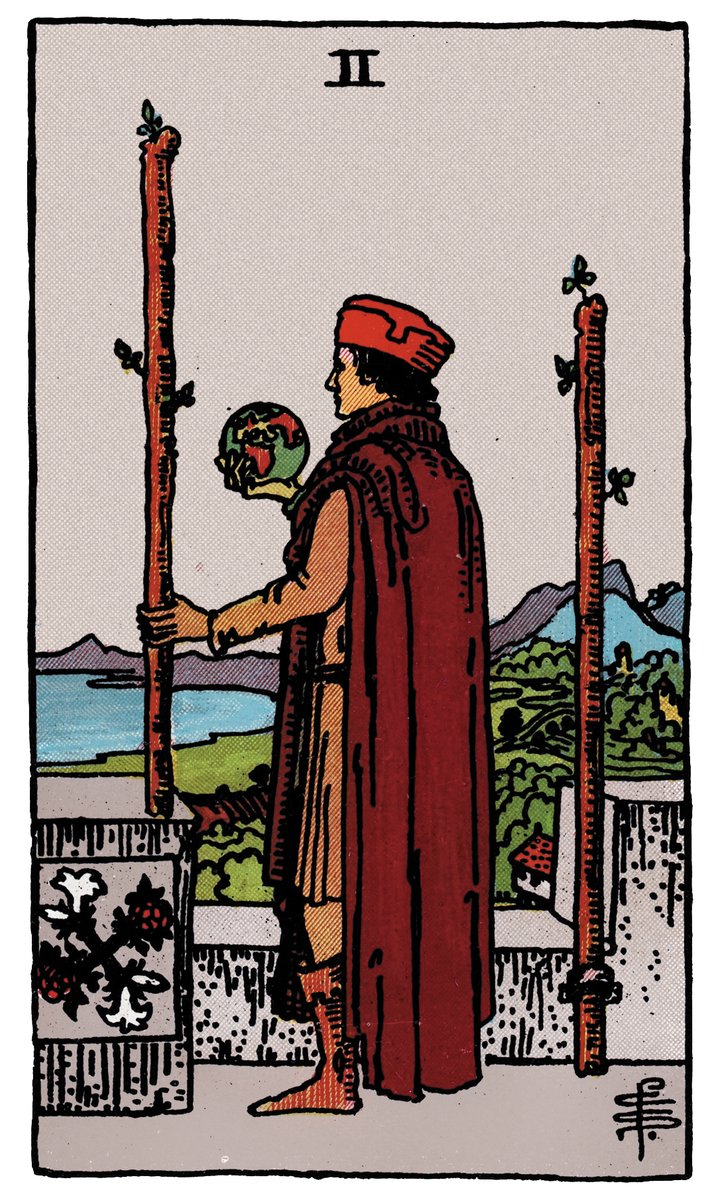
- A figure surveys sea and land from a battlement, holding a globe and one wand while a second wand is secured.
- Upright, the card favors choosing a direction, comparing possibilities and preparing to explore a wider horizon.
- Existing security provides a base for ambition, but looking outward is different from beginning the journey.
- Reversed, fear, vague planning or uncertain resources may keep expansion suspended at the threshold.
- Decide what the proposed future requires in practice, including what you would retain, change and be willing to leave.
Upright Two of Wands meaning
The Two of Wands upright describes the stage when possibility becomes a question of direction. You have enough perspective to imagine life beyond your current arrangement, but the next chapter still needs a deliberate choice. The globe represents a world held in the mind and hand; the figure remains inside the battlement. This tension makes the card especially useful for plans that feel exciting in theory but have not yet been translated into a route.
In love, the card can invite a conversation about where a relationship is going. Two people may be considering travel, a move or a different way to share their time. Compare actual visions rather than assuming that mutual affection supplies identical goals. For someone single, expanding the places where you meet people may be more relevant than waiting for a particular person. Decide what kind of connection belongs in the life you want to build.
At work, the Two of Wands suits exploring a new market, comparing roles or considering whether a successful small project can grow. Establish what you know before extrapolating. Who would use the expanded service, what resources would it require and what evidence would justify a first trial? The card supports ambition that can explain its next step. A striking vision needs a practical sequence if other people are going to contribute.
For personal development, notice whether your chosen horizon is yours or inherited from someone else's definition of success. A larger life may mean deeper involvement in a local community rather than greater distance or prestige. The height of the battlement offers perspective, but it can also distance you from everyday experience. Test the vision with one conversation, visit or small commitment outside your familiar position.
Two of Wands reversed meaning
The Two of Wands reversed may describe the discomfort of approaching an unfamiliar future. You can explain why change is attractive while continually finding reasons to remain within the walls. Some hesitation is sensible: your present stability may support people or responsibilities that matter. Identify the specific risk instead of calling yourself cowardly. Losing predictable hours, leaving a supportive team and entering a new social setting are different concerns that call for different preparations.
The reversal can also reveal a plan whose impressive scale hides missing detail. You imagine opening in three cities before confirming that the first location works, or discuss moving together without examining daily routines. Reduce the horizon until you can name a useful experiment. Delayed expansion can become constructive when the pause produces research, clearer agreements or a more accurate assessment of capacity.
In love, a shared future may remain vague because the partners want different things or because neither has asked directly. At work, an abandoned proposal may need better timing rather than a louder pitch. Ask what would make you prepared enough to choose, and write down the answer. If the conditions remain impossible no matter how much you learn, the barrier may be emotional. A smaller departure from routine can help you practice uncertainty without requiring a dramatic leap.
Two of Wands upright vs reversed by situation
| Situation | Upright | Reversed |
|---|---|---|
| Love | Comparing future plans and deciding what to build together | Different horizons, fear of change or postponed conversations |
| Work | Researching expansion and choosing a strategic direction | Premature scale, incomplete preparation or delayed entry |
| Friendship | Planning shared experiences beyond the usual routine | Keeping plans hypothetical or assuming everyone wants the same trip |
| Personal growth | Defining an independent vision from a stable base | Staying within familiar limits or revising borrowed ambitions |
Check whether the planning process ends in a decision someone can act on. An upright reading does not require the largest possible choice, and a reversed reading does not require abandoning ambition. The question is whether your relationship with the horizon is becoming clearer or whether the view itself has replaced participation.
Two of Wands keywords
| Upright | Reversed |
|---|---|
| Deliberate planning | Incomplete preparation |
| World-in-hand ambition | Fear of unfamiliar territory |
| Choosing a horizon | Deferred expansion |
| Strategic perspective | Ambition without a route |
| Readiness to explore | Attachment to safety |
Use perspective to compare two realistic paths, including the option to stay where you are. For each path, name one likely gain, one cost and the first fact you need to verify. This turns the globe from an object of fascination into a working map. A choice becomes more useful when you can explain what it would look like next week.
Two of Wands as advice, outcome and spread positions
As advice, the Two of Wands encourages you to decide what kind of expansion you are actually seeking. In a fictional example, Leila runs a successful neighborhood workshop and imagines teaching overseas. She compares an online pilot with a full relocation, contacts a potential host and estimates the preparation time. She discovers that reaching international students matters more to her than moving. The first trial becomes smaller and more aligned with the ambition underneath the original picture.
As an outcome, the card may suggest a period of surveying opportunities and forming an intention. It does not guarantee that a journey has begun. If the spread asks about a project, look for evidence of a selected route, assigned responsibilities and a date for the next decision. Planning can be meaningful progress, provided the people involved know how it connects to action.
In a past position, the figure may represent an earlier vision that still shapes your choices. In the present, ask which future deserves preparation now. As an obstacle, watching from a secure distance may have become more comfortable than participating. Beside the Three of Wands, the card can show the difference between selecting a horizon and engaging with developments beyond it. Beside the Knight of Wands, it asks whether a surge of enthusiasm is following the plan or pulling you away from it.
Is the Two of Wands a yes or no card?
The Two of Wands leans yes to research, planning and choosing an achievable direction. It gives a conditional answer to a major expansion: the vision needs resources and an agreed next step. A question about contacting a possible collaborator fits the card more closely than asking whether every part of a distant future is certain to succeed.
Reversed, pause to identify the unprepared element or fear holding the choice open. Use the yes or no tarot guide to frame a decision you can make with current information. You might ask whether to arrange a trial visit before committing to a move. The battlement offers a vantage point from which to prepare, rather than a promise that every road beyond it is suitable.
Two of Wands symbolism in the Rider–Waite–Smith deck
Pamela Colman Smith shows a figure on a fortified terrace looking across land and water. A globe rests in one hand, one wand is held, and the second is fixed to the structure. The contrast between the held and anchored wands supports reflection on mobility and established security. The world can be contemplated from this protected position, while the figure's feet remain on familiar ground.
Waite's Two of Wands description identifies the globe, battlement and fixed staff. His historical meanings are mixed, including grandeur alongside dissatisfaction; his reversal includes surprise and fear. The planning emphasis used here is a contemporary interpretation of the scene. That distinction matters: treating the globe as a prompt to define ambition is more grounded than presenting modern career advice as a literal quotation from the original text.
Frequently asked questions about the Two of Wands
Does the Two of Wands mean moving abroad?
The globe and outward view can fit a question about international opportunities, but they do not establish that a move will happen. The card may instead concern study, a wider audience or a new direction close to home. Examine what expanding your world means in the situation you asked about.
How is the Two of Wands different from the Three?
The Two emphasizes perspective, choosing a direction and preparing to leave a familiar position. The Three more often concerns engagement with an undertaking that has extended outward and the developments that follow. Ask whether you are still comparing routes or already responding to results beyond your starting point.
Is the reversed Two telling me to stay safe?
It may draw attention to a legitimate need for preparation, but it can also expose fear that keeps moving the goalposts. Name the risk and decide what would reduce it enough for a trial. Staying can be an intentional choice when it reflects your priorities rather than unexamined avoidance.
What does this card suggest for an established relationship?
Discuss the practical shape of your shared future, including goals that may differ. One partner may want a move while the other wants stronger local roots. The card invites an honest comparison of those horizons before either person treats an imagined future as an agreement already made.
What action makes sense if I have too many plans?
Choose one horizon to investigate for a defined period and set the others aside temporarily. Contact a person with direct experience, check a practical requirement or test the smallest workable version. A focused investigation creates information that another evening of imagining every possibility may never supply.
What does Two of Wands mean for you?
Already have this card? Choose its orientation and add your question. We’ll interpret this exact card in context, without drawing a different one.
One personalized interpretation uses one free reading. Subscribers get unlimited readings, follow-up questions, and supplemental cards. Your reading stays private.
Two of Wands
For reflection and personal insight. Your choices shape what comes next.
A question to take with you
Planning opens the horizon, but a plan also needs a decision about where you will commit your effort. Where would a more deliberate use of my energy help?
Explore a question with the cards →These are contemporary reflection prompts, not a single definitive meaning. For historical background, see A. E. Waite’s The Pictorial Key to the Tarot. Interpretations vary with the reader and the context.