 Fate & Stars
Ace of Wands tarot card meaning
Ace of Wands meaning at a glance
The Ace of Wands means a spark of initiative, creative energy and permission to begin. A hand offering a budding wand presents possibility before a finished result exists. Upright, act on a compelling idea through a manageable first step; reversed, the spark may need time, clearer direction or conditions that support growth.
Things You Should Know
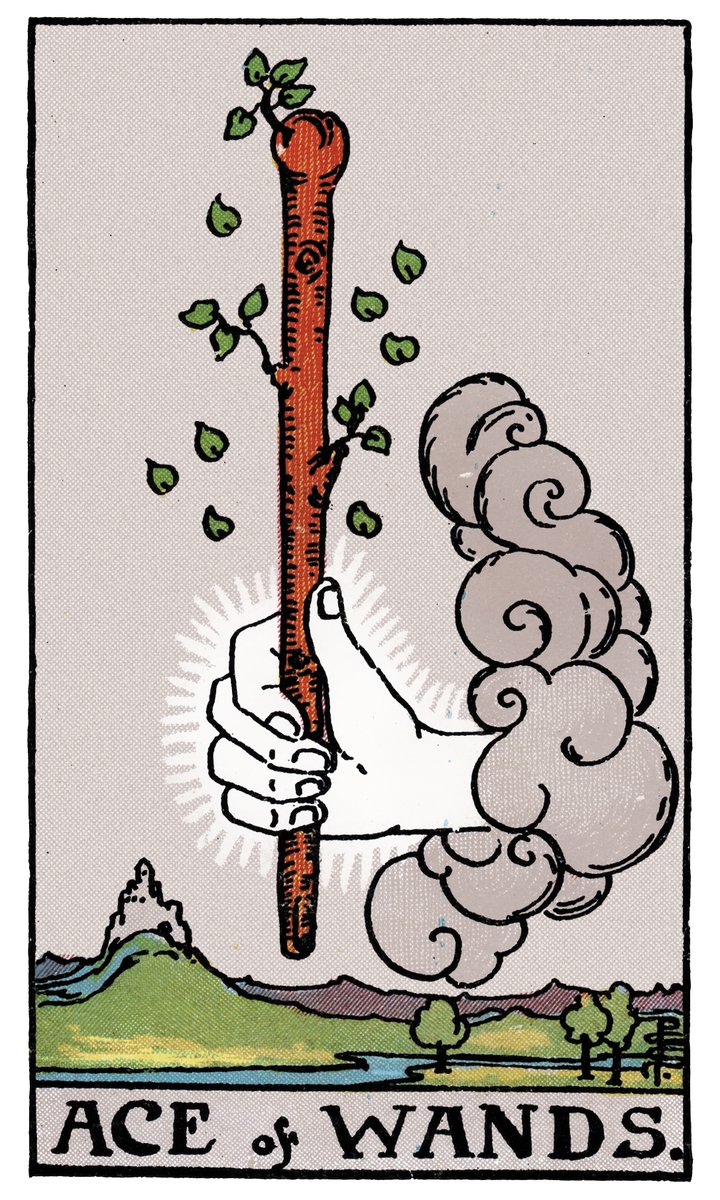
- A hand emerges from a cloud holding a budding wand, presenting creative potential that still needs someone to use it.
- The living shoots emphasize growth: an exciting start becomes useful through attention, experimentation and repeated effort.
- Upright, this ace favors beginning a project, expressing interest or trying an unfamiliar approach with genuine enthusiasm.
- Reversed, inspiration may be muted, delayed or divided among too many possibilities rather than permanently lost.
- Strong attraction and fresh excitement can motivate action, but neither establishes compatibility or guarantees a successful outcome.
Upright Ace of Wands meaning
The Ace of Wands upright marks the moment when an idea begins to feel actionable. The wand is already alive with shoots, yet no finished work appears beside it. That distinction matters: you are being offered a beginning rather than proof that every later stage will be easy. Treat enthusiasm as enough reason for a small experiment, then use what happens to decide how much more to invest.
In love, the card can describe attraction, playful initiative or renewed desire within an established relationship. You might suggest a date, express interest directly or plan an experience that breaks a stale routine. The offered wand favors an invitation that another person can freely accept or decline. Chemistry can open a conversation, while compatibility emerges through the way you handle expectations, differences and ordinary time together.
At work, this ace supports pitching an idea, building a rough demonstration or volunteering for an assignment that develops an ability you want to use. Begin with a scope you can complete and show to someone. A proposal tested with one real user gives your spark a better chance than a grand announcement with no next step. For personal creativity, a short session with materials may reveal more than waiting for complete confidence.
Ace of Wands reversed meaning
The reversed Ace of Wands can describe wanting to begin while feeling little usable energy. Perhaps the idea interests you, but every available hour is crowded with other demands. The budding wand needs suitable conditions. Reduce the size of the first action, clear a small block of time or decide deliberately to return later. Delay can protect an idea from being launched into circumstances that cannot sustain it.
Another expression is scattered ignition: you start several things whenever novelty appears and abandon them before learning whether they have substance. Choose one experiment and define what would count as a useful result. The reversal then becomes a request for direction rather than an accusation that you lack talent. Some ideas should be set aside; choosing among them is part of creative work.
In relationships, muted enthusiasm may reflect timing, fatigue or uncertainty about what is being offered. It does not prove rejection or hidden attraction. Ask a clear question and listen to the answer. If you feel pressured to display excitement you do not feel, slow the pace. The ace's invitation remains meaningful only when the person receiving it has room to discover their own response.
Ace of Wands upright vs reversed by situation
| Situation | Upright | Reversed |
|---|---|---|
| Romance | Attraction encourages an open invitation | Desire is uncertain or timing needs adjustment |
| Creative work | A promising idea becomes a first attempt | Perfectionism or competing sparks delay a start |
| Career | Initiative produces a testable proposal | Enthusiasm lacks scope, time or support |
| Personal growth | Curiosity invites direct experience | Energy returns through smaller experiments |
Both columns begin before a result is established. Ask what would help the budding wand grow in the situation you actually have. Upright momentum benefits from a practical container; reversed momentum may need that container before excitement returns. Neither position requires a dramatic leap with consequences you have not considered.
Ace of Wands keywords
| Upright | Reversed |
|---|---|
| Creative ignition | Inspiration muted |
| Initiative | Beginning delayed |
| Fresh attraction | Uncertain desire |
| Enterprise | Direction scattered |
| Permission to start | Conditions need tending |
Use these words to identify the stage of the process. If you already have an idea, initiative may mean making a first sample rather than collecting more possibilities. If you feel blocked, name the obstacle precisely. A missing tool, a crowded schedule and fear of showing imperfect work each require a different response to the same reversed spark.
Ace of Wands as advice, outcome and spread positions
As advice, the ace encourages a start small enough to teach you something. In a fictional example, Jonah wants to create a neighborhood storytelling night. Instead of renting a venue immediately, he invites four people to an informal session and asks which format they enjoyed. The first gathering gives his excitement a shape, and the feedback helps him decide whether a larger event is worth organizing.
As an outcome, this card may indicate a new opening, a fresh idea or restored willingness to participate. It is an early outcome: a door opens, but you still need to walk through it and do the work. Define the next milestone so the card's promise of potential does not become an expectation of effortless completion. A promising conversation can be valuable before it becomes a contract or commitment.
In a past position, the wand may mark the original impulse behind your current undertaking. In the present, ask which action would turn interest into experience. As an obstacle, endless pursuit of excitement may keep you from tolerating the ordinary middle of a project. Beside the Ten of Wands, consider whether taking on another inspiring idea would create a load you cannot comfortably carry.
Is the Ace of Wands a yes or no card?
The Ace of Wands generally leans yes for starting, experimenting and expressing an interest you can act on responsibly. Its strongest answer concerns your participation: try the lesson, sketch the idea or make the invitation. It offers less certainty about another person's response or the eventual scale of success. Choose a first step whose cost and commitments fit what you currently know.
Reversed, the answer is often not yet, especially when energy or direction is missing. Use the yes or no tarot guide to turn a broad ambition into a clear decision. Asking whether to make a small prototype this week is more workable than asking whether one exciting idea will transform your entire future.
Ace of Wands symbolism in the Rider–Waite–Smith deck
Pamela Colman Smith depicts a hand extending from a cloud with a stout, sprouting wand above a landscape. The absence of a person already using the wand leaves the action open: the resource is offered, and the next move belongs to the reader's situation. The leaves make vitality visible, while the distant terrain reminds us that an initial impulse still has somewhere to go.
In Waite's Ace of Wands entry, creation and the beginning of enterprises are central associations; his Pictorial Key provides the broader historical context. His reversal language is much harsher than a simple delay. This guide uses a contemporary reading of blocked or redirected initiative, grounded in the same emerging energy, rather than treating those historical warnings as inevitable events.
Frequently asked questions about the Ace of Wands
Does the Ace of Wands guarantee a new relationship?
It can describe attraction or willingness to make a first move, but a relationship requires mutual interest and continued participation. The budding wand suggests an opening stage. Notice whether excitement leads to respectful communication and reliable plans before deciding what kind of connection is developing.
What does the Ace of Wands mean for creativity?
An idea may have enough vitality to deserve an initial attempt. Work with a rough draft, short rehearsal or simple sample that lets you experience the idea directly. You do not need a complete creative identity before beginning; the attempt itself can clarify what interests you.
Is the reversed Ace of Wands a lost opportunity?
Sometimes an opening has passed, but reversal can also indicate that the timing or format needs revision. Ask whether you still want the underlying experience. A smaller project or later start may preserve its value without requiring you to force the original plan through unsuitable conditions.
Does this ace predict pregnancy?
Historical associations include birth and generative energy, but a tarot card cannot establish pregnancy. Within an ordinary reading, the wand can symbolize creation in many forms, from making art to beginning a shared project. Interpret that imagery in context rather than turning a broad symbol into a factual claim.
How can I distinguish inspiration from an impulse I will regret?
Give the idea a limited trial and observe your response after the first rush fades. Set a modest budget of time or materials, then review what you learned. Sustainable interest often survives contact with practical details, while a passing impulse may lose its appeal once the experiment becomes concrete.
What does Ace of Wands mean for you?
Already have this card? Choose its orientation and add your question. We’ll interpret this exact card in context, without drawing a different one.
One personalized interpretation uses one free reading. Subscribers get unlimited readings, follow-up questions, and supplemental cards. Your reading stays private.
Ace of Wands
For reflection and personal insight. Your choices shape what comes next.
A question to take with you
An initial spark needs a place to become action, rather than remaining an exciting possibility. Where would a more deliberate use of my energy help?
Explore a question with the cards →These are contemporary reflection prompts, not a single definitive meaning. For historical background, see A. E. Waite’s The Pictorial Key to the Tarot. Interpretations vary with the reader and the context.