 Fate & Stars
Six of Wands tarot card meaning
Six of Wands meaning at a glance
The Six of Wands means recognition after effort, visible progress and confidence strengthened by public support. A laurel-crowned rider moving among a crowd makes achievement a social event. Upright, accept credit while acknowledging contributors; reversed, praise may be delayed, difficult to receive or too important to your sense of worth.
Things You Should Know
- The rider wears a laurel wreath and carries a wand with another wreath, making success visible to the surrounding people.
- The crowd matters: recognition depends on an audience, and achievement often rests on contributions beyond the person receiving attention.
- Upright, the card supports acknowledging progress, presenting completed work and allowing well-earned praise to register.
- Reversed, recognition may arrive slowly, remain private or become tangled in comparison and the pressure to appear successful.
- A public win is a milestone rather than a permanent rank; confidence stays useful when it remains open to feedback.
Upright Six of Wands meaning
The Six of Wands upright describes effort becoming visible enough for others to acknowledge. The rider does not stand alone in an empty landscape; people surround the horse and carry wands of their own. This makes the card especially relevant when a private achievement enters a public setting, such as presenting work, receiving thanks or taking on a role because others trust your ability. Recognition can help you understand what your contribution has made possible.
In love, the card may suggest feeling appreciated or being comfortable acknowledging a relationship publicly. A partner might celebrate your accomplishment or express pride in how you handled a difficult period. Let that appreciation be specific and mutual. The rider's elevated position becomes less helpful if one person needs to remain the admired figure while the other's needs stay in the crowd.
At work, this card favors making results legible. Describe the problem you helped solve, the evidence of improvement and the people who contributed. That approach allows appropriate confidence without claiming every part of a collective success. For personal growth, receiving a compliment without dismissing it can be a useful practice. You can accept that something went well while still having skills to develop and future work to do.
Six of Wands reversed meaning
The reversed Six of Wands may describe recognition that is delayed or smaller than expected. You could complete strong work and receive little response because the relevant people have not seen it, the review process is slow or the achievement is hard to measure. Before treating silence as a verdict, find out how recognition actually happens in that setting. A concise update or request for feedback may address a visibility problem.
Another possibility is that praise arrives but cannot settle your doubts. You discount every success, compare it with someone else's larger audience or worry that the next attempt will expose you. The laurel then becomes something you must constantly defend. Record what you accomplished and which actions contributed to it. Concrete evidence gives confidence a firmer basis than repeatedly asking the crowd whether you are still impressive.
Reversal can also show pride getting tangled with leadership. If you take all the credit or become impatient with criticism, supporters may feel used. Repair through accurate acknowledgment and a willingness to hear what needs improving. The card does not establish that someone is jealous or disloyal. Read observable behavior first, and remember that a person can disagree with you while still valuing your contribution.
Six of Wands upright vs reversed by situation
| Situation | Upright | Reversed |
|---|---|---|
| Love | Partners openly appreciate one another | Validation becomes uneven or performative |
| Career | Results earn visibility and support | Credit is delayed, overlooked or poorly shared |
| Leadership | Confidence helps others rally around a goal | Image management interferes with listening |
| Personal growth | Achievement becomes believable evidence | Comparison makes praise difficult to absorb |
The difference lies partly in your relationship with the audience. Support is valuable, but the crowd cannot supply a permanent answer to every doubt. Ask what you want recognized and whether the recognition accurately reflects the work. A smaller, truthful acknowledgment may serve you better than broad attention disconnected from your actual contribution.
Six of Wands keywords
| Upright | Reversed |
|---|---|
| Recognition | Praise delayed |
| Visible achievement | Contribution overlooked |
| Earned confidence | Confidence unsettled |
| Public support | Approval dependence |
| Shared credit | Pride needing care |
Apply the words to a concrete milestone rather than your whole identity. Being recognized for one successful presentation does not mean you must excel at every task. Likewise, being overlooked in one meeting does not erase the underlying work. The wreath can mark a real achievement without becoming a crown you must wear continuously to deserve respect.
Six of Wands as advice, outcome and spread positions
As advice, this card encourages you to make progress visible and receive the response with proportion. In a fictional example, Theo's volunteer team improves access to a local event. When the organizers thank him publicly, he accepts the acknowledgment and names the people who tested routes and arranged equipment. Sharing credit strengthens the group because the applause reflects the actual pattern of contribution.
As an outcome, the Six of Wands can suggest favorable feedback, a public milestone or increased willingness from others to support your work. It cannot guarantee a promotion, an award or a particular selection result. Prepare for recognition by knowing what you want to communicate and what responsibilities might follow. A successful presentation may create an opening whose value depends on how you handle the next conversation.
In a past position, the rider may represent a previous success that still shapes your expectations. In the present, ask whether it is time to show work that has remained hidden. As an obstacle, concern about reputation may make experimentation feel too risky. Beside the Five of Wands, the contrast highlights the transition from competing contributions to an acknowledged result; disagreement along the way need not invalidate the eventual achievement.
Is the Six of Wands a yes or no card?
The Six of Wands tends toward yes for presenting a completed effort, acknowledging progress or asking for appropriate recognition. The rider's wreath supports confidence when there is substance behind it. If your question depends on winning a competitive decision, take the card as encouragement to prepare and participate rather than proof that the audience will choose you.
Reversed, a not yet may point toward missing visibility, uncertain criteria or a need to improve how you communicate the result. Use the yes or no tarot guide to focus on your next action. Asking whether to share a concise record of your work is more useful than asking whether everyone will admire you.
Six of Wands symbolism in the Rider–Waite–Smith deck
Pamela Colman Smith shows a mounted figure with a laurel wreath, carrying a wand decorated with another wreath. The surrounding people and their staffs give the image the character of a procession. The horse raises the rider above the crowd, creating visibility while also making the distinction between the celebrated person and the surrounding contributors impossible to ignore. A modern reading can use that contrast to examine credit and responsibility.
Waite's Six of Wands discussion connects the scene with triumph, significant news and fulfilled expectation. His Pictorial Key includes delay and fear among the reversed associations. This guide applies those themes to recognition and confidence without treating historical references to disloyalty as evidence against particular people. The crowd's presence invites questions about support; it does not reveal private motives.
Frequently asked questions about the Six of Wands
Does the Six of Wands guarantee that I will win?
It is an encouraging image of success, but it does not determine a competition or another person's decision. Use it to identify what preparation, visibility and support would strengthen your participation. A favorable reading can motivate a sound effort without making the result certain.
What does the Six of Wands mean as feelings?
It may suggest admiration, pride or enjoyment in being associated with someone. Those feelings can be warm, but the card alone cannot distinguish affectionate appreciation from a wish for attention. Notice whether interest includes listening, reliability and room for both people to receive recognition.
Is the reversed Six of Wands about jealousy?
Jealousy is one possible dynamic when comparison dominates a situation, but reversal does not establish anyone's motive. Delayed feedback or difficulty accepting praise can fit just as well. Ask what actually happened to the credit or communication before attributing hostility to the people around you.
How can I accept praise without becoming arrogant?
Acknowledge the specific achievement, thank the person and recognize relevant contributors. You do not have to dismiss your own work to remain considerate. Confidence becomes easier to trust when it describes what happened accurately and leaves room for other people to have strengths, ideas and achievements too.
How does the Six of Wands differ from the Three of Cups?
The mounted rider makes one person's or one effort's recognition especially visible. The Three of Cups places the participants together in a shared toast, emphasizing mutual enjoyment and belonging. Ask whether your situation centers on an acknowledged accomplishment or on the experience of celebrating with others.
What does Six of Wands mean for you?
Already have this card? Choose its orientation and add your question. We’ll interpret this exact card in context, without drawing a different one.
One personalized interpretation uses one free reading. Subscribers get unlimited readings, follow-up questions, and supplemental cards. Your reading stays private.
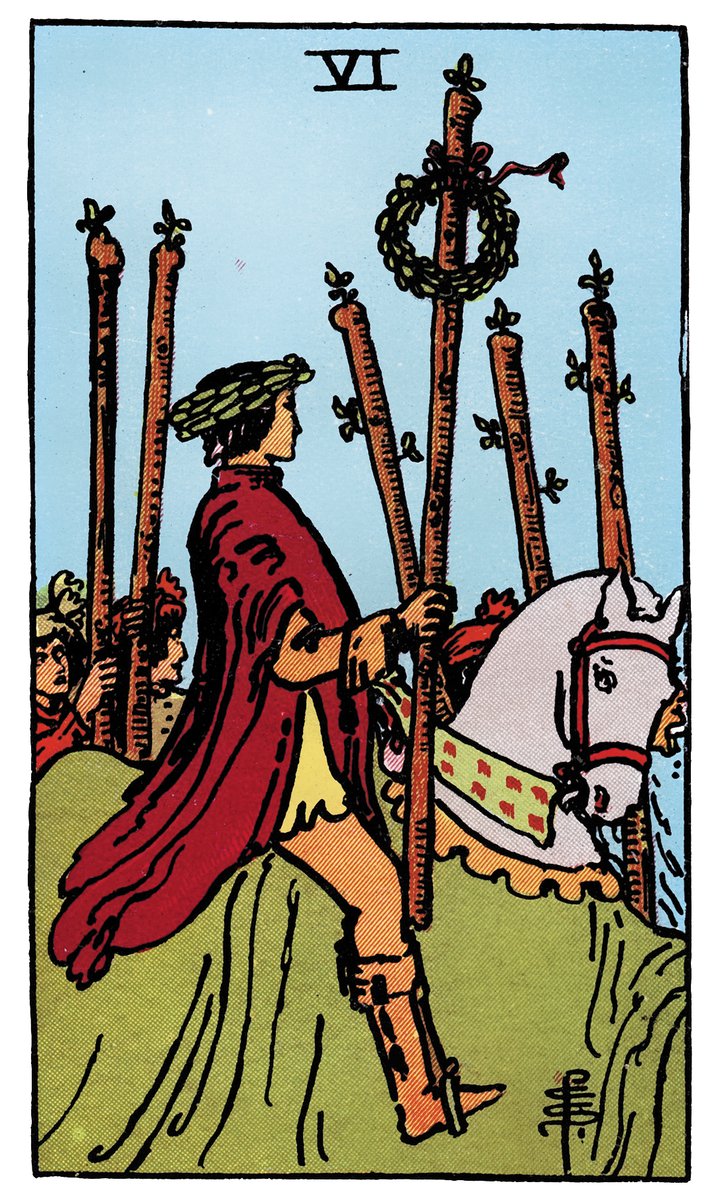
Six of Wands
For reflection and personal insight. Your choices shape what comes next.
A question to take with you
Recognition can encourage progress, but approval from others is not a substitute for your own measure of success. Where would a more deliberate use of my energy help?
Explore a question with the cards →These are contemporary reflection prompts, not a single definitive meaning. For historical background, see A. E. Waite’s The Pictorial Key to the Tarot. Interpretations vary with the reader and the context.