 Fate & Stars
Ace of Swords tarot card meaning
Ace of Swords meaning at a glance
The Ace of Swords represents clarity, a decisive idea and the ability to name a problem precisely. It favors understanding that can guide action.
A hand raises a crowned sword against distant mountains.
Upright meaning
Upright, the raised sword suggests cutting through confusion with a clear distinction or honest statement. A new insight may change how you frame a question. Test it against evidence and express it in terms others can understand.
Reversed meaning
Reversed, the Ace of Swords can describe confusion, miscommunication or certainty built on an incomplete picture. Revisit the question and the information behind your conclusion. Precision may require admitting what is still unknown before making a decision.
Interpret this reversed card for my situation →Love and relationships
In love, a clear conversation can name a need or resolve an assumption. Reversed, words may be ambiguous or difficult to hear. Ask what was meant and avoid treating a forceful statement as the whole truth of the connection.
Work and everyday life
At work, define the problem and distinguish facts from interpretations. Reversed, an unclear brief or unsupported claim may obstruct a useful decision. Write the objective plainly before choosing a method.
What does Ace of Swords mean for you?
Already have this card? Choose its orientation and add your question. We’ll interpret this exact card in context, without drawing a different one.
One personalized interpretation uses one free reading. Subscribers get unlimited readings, follow-up questions, and supplemental cards. Your reading stays private.
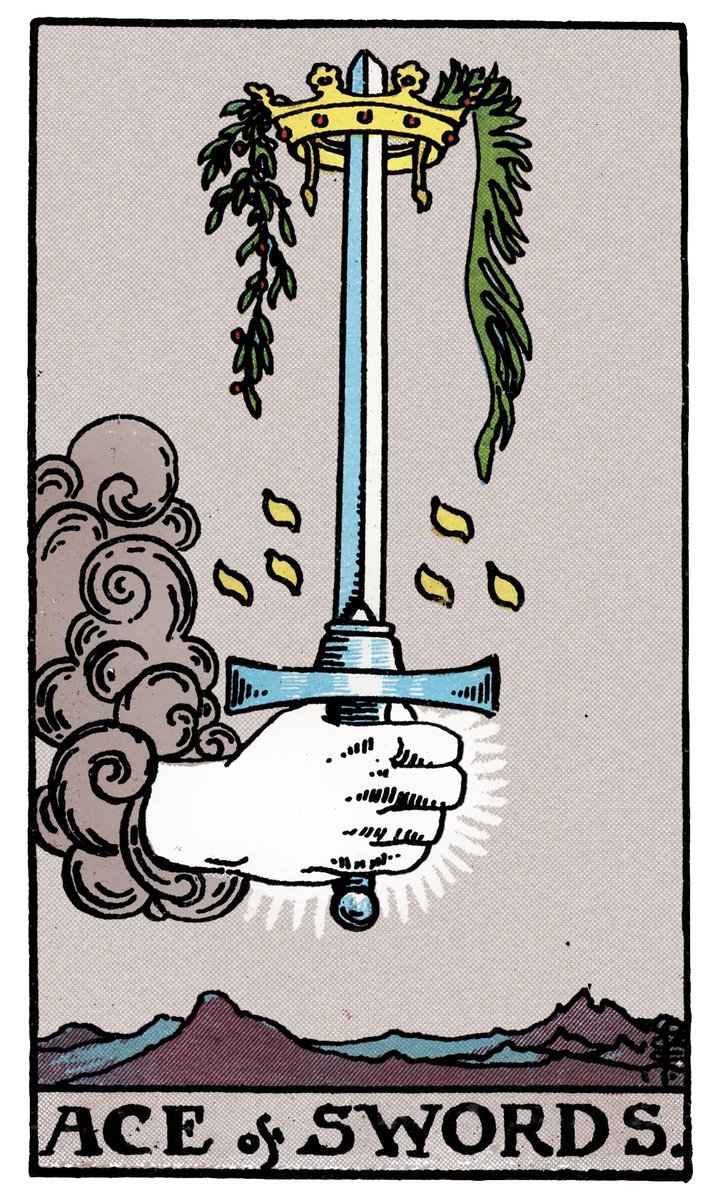
Ace of Swords
For reflection and personal insight. Your choices shape what comes next.
A question to take with you
A clear insight can cut through confusion; the next task is expressing it accurately and deciding how to use it. Which assumption could I check against observable evidence?
Explore a question with the cards →These are contemporary reflection prompts, not a single definitive meaning. For historical background, see A. E. Waite’s The Pictorial Key to the Tarot. Interpretations vary with the reader and the context.